|
Food poisoning is an acute syndrome with nausea,
abdominal cramping, vomiting and/or diarrhea which appear suddenly and
within 48 hours after ingestion of food contaminated with pathogenic
bacteria, viruses or toxins produced by bacteria. Depending on the
contaminant, other symptoms such as chills and fever, bloody stools,
dehydration, and nervous system damage may follow and can lead to death.
Description of Food Poisoning
At least one out of five Americans suffer food poisoning each year, and
over 9,000 deaths are reported as a result. Food poisoning stems not
from food additives, chemical fertilizers, or pesticides applied to food
by growers or processors, but from poor food storage or handling
practices in home or restaurant kitchens that cause food to become
contaminated.
|
 |
Causes and Risk Factors of Food Poisoning
The Centers for Disease Control estimates that unknown agents cause 81
percent of all food-borne illnesses and hospitalizations. There are more
than 200 known diseases that can be transmitted through food, however,
and the known causes of food poisoning include infective agents and
toxic agents.
Infective agents include viruses, bacteria, and parasites. Toxic agents
include poisonous mushrooms, improperly prepared exotic foods (such as
barracuda), or pesticides on fruits and vegetables.
Food usually becomes contaminated with these agents from poor sanitation
or preparation. Food handlers who do not wash their hands after using
the bathroom or have infections themselves often cause contamination.
Improperly packaged food stored at the wrong temperature also promotes
contamination.
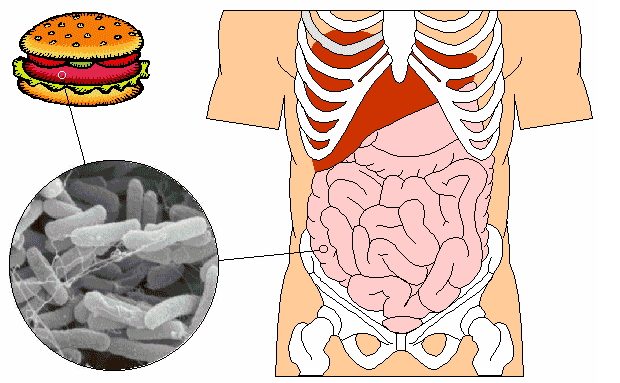
Three of the most important causes of food poisoning are the salmonella,
clostridium botulinum and staphylococcal organisms.
|
 |
Symptoms of Food Poisoning
The most common symptoms of food poisoning include diarrhea, watery
stools, abdominal cramps, nausea, vomiting, and fever. Most food
poisoning symptoms are mild, however, and can safely be treated at home.
Salmonella. Food poisoning caused by Salmonella bacteria gives victims
flu-like symptoms for as long as a week.
Botulism. The first symptoms appear abruptly, usually 18 to 48 hours
after the food was eaten. These symptoms include nausea, dry mouth,
vomiting, abdominal pain and blurring of vision. The toxin has a
paralyzing effect on the nervous system; it prevents the nerves from
conducting messages from the brain. Control of the muscles is lost,
beginning with those around the face and neck. Loss of the ability to
swallow makes it impossible to eat. It leads to choking and may
introduce foreign materials into the lungs. The victim usually dies
within several days.
If medical aid is quickly obtained and the correct diagnosis rapidly
made, death can be avoided. A serum may be injected which is sometimes
able to neutralize a portion of the toxin and limit further paralysis.
This serum cannot help the nerves that are already damaged. The speed
with which symptoms appear depends largely on the amount of
toxin-containing food that is eaten.
Staphylococcal food poisoning. This type of food poisoning is associated
with abdominal cramps, fever, vomiting and diarrhea. It appears about 6
hours after eating food contaminated with an enterotoxin formed by the
staph bacteria. Dairy products, pastries and fish are common foods
harboring this organism.
|
 |
Treatment of Food Poisoning
The most common treatment for simple food poisoning is simply supportive
care at home with clear liquids to stay hydrated, and after vomiting or
diarrhea subside, the gradual return to eating beginning with a bland
diet (such as rice, bread, potatoes and milk).
The doctor should be consultedalled if the person has nausea, vomiting
or diarrhea that lasts more than 2 days, a fever, dizziness or
unconsciousness, or if the symptoms are occurring after recent travel to
foreign countries, or if people who ate the same thing are also ill. A
visit to the hospital should be made if the person experiences vomiting
blood, a swollen abdomen, problems breathing, swollen joints, yellow
eyes or skin, or sharp abdominal pain that lasts more than 15 minutes.
What Questions To Ask Your Doctor About Food
Poisoning
What are the usual symptoms of food poisoning?
Which symptoms are the most serious?
What kind of food poising is it?
What treatment do you recommend
Will a serum be needed? |